Danavir Goswami on The Maha Podcast: Drafted Into the Israeli Army, and Twenty Years on the Garga Samhita
In a one-hour interview released on 30 September, the Prabhupada disciple recalls walking off a volleyball court the morning after meeting the devotees, negotiating mangala-arati with an Israeli drill sergeant, and the twenty-year effort behind his Garga Samhita edition.
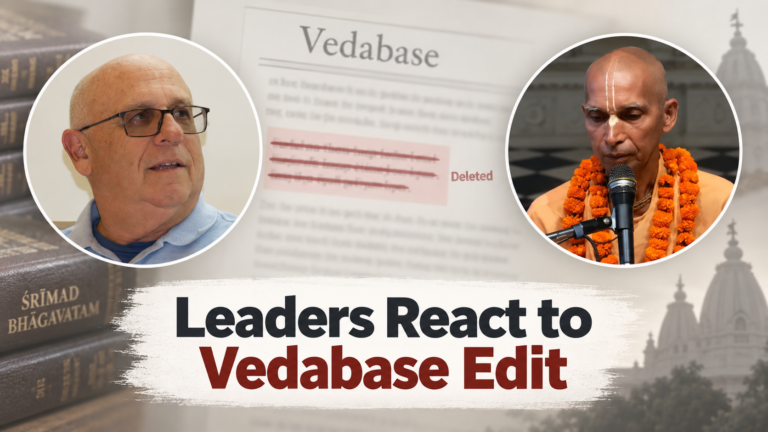
The Maha Podcast released its fifth episode on 30 September 2026, a 61-minute conversation with Danavir Goswami, who joined ISKCON in 1970 and was initiated by Srila Prabhupada in 1971, according to the episode description. The host says the discussion centres on Maharaja’s books and his memories of Srila Prabhupada.
Danavir Goswami said he joined in June 1970, after his third year at UCLA, where he was a competitive volleyball player. Walking through Westwood on a Friday night, he heard his name called by a former teammate who had joined the movement two months earlier. After about two hours of conversation he gave the devotee a $100 donation and received an abridged Bhagavad-gita As It Is, a Back to Godhead magazine and a packet of incense, then joined the chanting party. “Couldn’t believe what I was reading. Couldn’t stop reading,” he said of that night.
The next morning he drove to a tournament in San Diego, froze when his partner threw him the ball, and told him, “Last night I became a Hare Krishna.” He walked off the court and drove back to Los Angeles. On the Sunday he attended the feast, where Srila Prabhupada was present. “He commanded so much respect, and it was quite natural to bow down to him,” he recalled, adding that he could not yet understand much of Prabhupada’s accent.
Asked about an episode the host said is recounted in one of his books, Maharaja described being asked to lead ISKCON’s work in Israel and being drafted into three months of army training at the age of 38. He told the army he taught “chanting yoga” and negotiated the same allowances given to religious conscripts: rising at 3:45, mangala-arati at 4:30, tulasi worship, about two hours of japa and greeting the Deities, all of which the drill sergeant checked on daily. In a weapons class he asked the instructor, “When we kill them, whom do we kill, the body or the soul?” The instructor dismissed the class to discuss it with him.
He also recalled leading a group of about 60 returning soldiers in chanting and dancing, in uniform, until the base rabbi, who was also an officer, stopped it and threatened to write to the head of the army. Maharaja said he asked for a sheet of paper to write his own letter about the state of the rabbi’s office, and “no more letters” were written. He distributed books that devotees brought him at weekends and said the story of a Hare Krishna leader drafted into the Israeli army ran in the newspapers.
On the bhakta programme described in his book Fortunate Souls, he said a newsletter with friendly competition between temples, approved by Srila Prabhupada, helped bring about 1,100 new devotees a year into the American temples, counting those who stayed at least three months, and that a small temple in Peru at one point outscored the large temples.
He said his work on Vedic Cosmology began when he was asked to help gather knowledge for the planetarium project. He went to Ganga Sagar to pray for the blessings of Kapila, Ganga and Sagara, met scholars of the Madhva line, and produced a 53-minute documentary from that year of research.
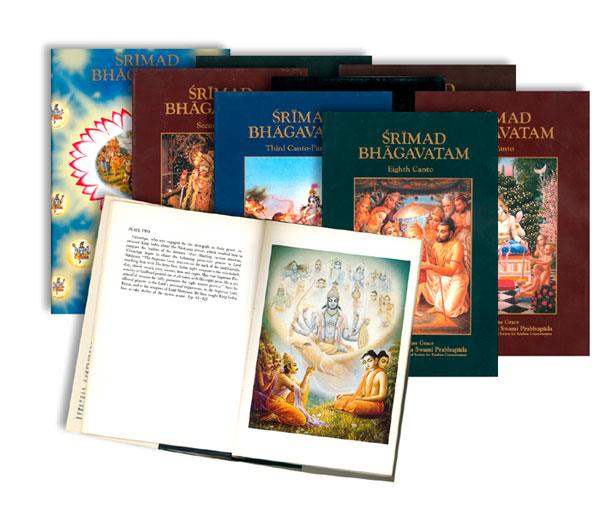
The longest part of the conversation concerns the Garga Samhita, which he said has taken twenty years. He described Garga Muni as the priest of the Yadu dynasty who performed the name-giving ceremony of Krishna and Balarama and arranged the marriage of Vasudeva and Devaki, and said the text is built around questions put to Narada Muni by King Bahulasva of Mithila. Where the Srimad-Bhagavatam summarises, he said, the Garga Samhita gives details, including some two thousand verses on the Ramayana, and passages the host cited on Kamsa, Duryodhana and Surpanakha. The host read references to the work from Sanatana Goswami, Rupa Goswami and the commentary of Gopiparanadhana Dasa.
Maharaja said a godbrother had translated the text up to the sixth canto and a husband-and-wife team of disciples completed the rest, while he wrote the commentary. “I know Prabhupada might have some stern words for me, the audacity of trying to write this, but I know he’d like me to finish it,” he said. Asked about his next project, he declined to say. The host asked listeners to buy the set, saying proceeds support Maharaja’s preaching.
Source: The Maha Podcast on YouTube
Discover more from Akincana Gocara
Subscribe to get the latest posts sent to your email.