Can Anyone Be a Diksa-Guru? IISB Opens a Three-Part Video Series on Rohini-tanaya Dasa’s Paper
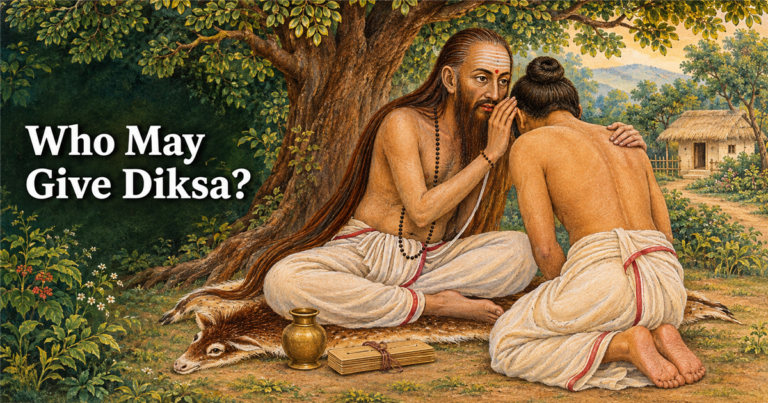
The ISKCON India Scholars Board has opened a three-part video series on Rohini-tanaya Dasa’s paper on female diksa-gurus. Part one asks how a general verse on who can be a guru relates to the specific rules of the Pancaratra.
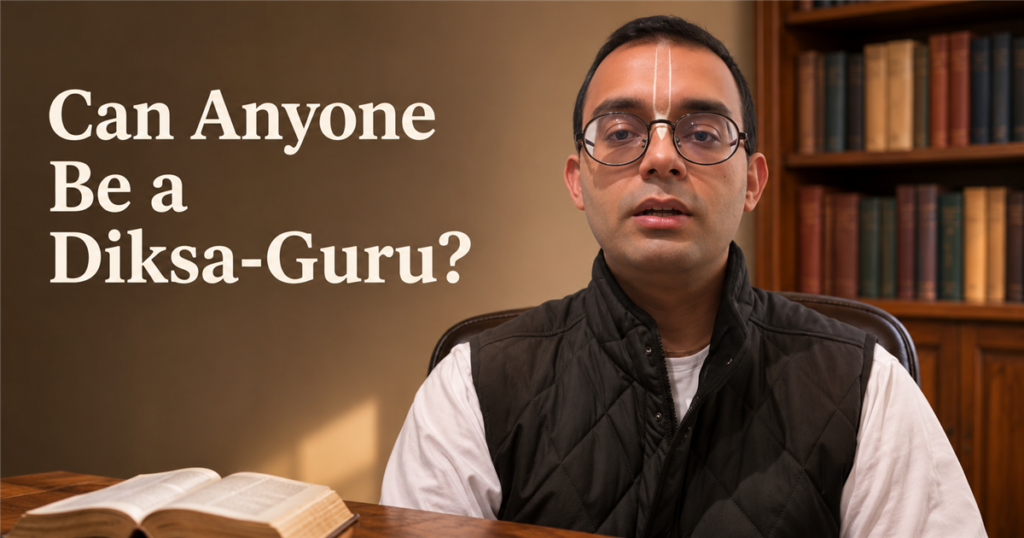
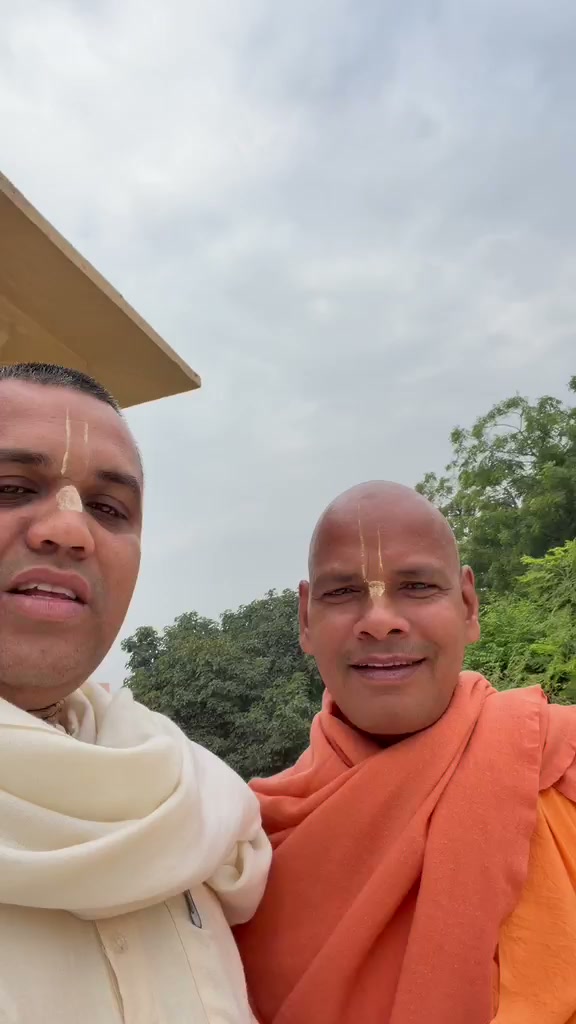
INDIA — The ISKCON India Scholars Board (IISB) released on 10 November 2026 a 91-second video, the first of a three-part series by Rohini-tanaya Dasa, presenting his case that the female diksa-guru question must be settled by harmonising guru, sadhu and shastra, with scripture as the final authority.[1] The video summarises his paper “Achieving Harmonization Through Synthesis”, published on the IISB website on 6 November, which Akincana Gocara reported on 8 November.[2][3]
The general rule and the specific one
The video, “FDG: What is Samanya-Vishesha Nyaya?”, opens with the question at the heart of the debate: how to reconcile an informal 1976 room conversation of Srila Prabhupada with Professor O’Connell in Toronto with “decades of published Gaudiya Vaishnava law books”.[1] Supporters of female diksa-gurus cite that conversation, and Lord Caitanya’s statement in Caitanya-caritamrta, Madhya-lila 8.128, that anyone who knows the science of Krishna can be a guru.
Rohini-tanaya Dasa answers with samanya-vishesha-nyaya, the principle of Vedic interpretation by which a broad general rule is limited by specific scriptural injunctions:[1]
“Just as the broad instruction to offer whatever you eat in the Bhagavad-gita doesn’t bypass specific dietary rules, a general spiritual qualification doesn’t erase statutory Pancaratrika standards.”
Rohini-tanaya Dasa, IISB video, 10 November 2026
He points to Srila Prabhupada’s purport to Srimad-Bhagavatam 4.12.32, on Dhruva Maharaja’s mother Suniti, as evidence that “structural restrictions exist for a reason”, and argues that ignoring the Sruti, Smrti and Pancaratrika-vidhi “only creates societal disturbance”.[1]
Two questions for parts two and three
The video closes with two questions the next parts will take up: how to address “the famous Toronto conversation”, and, if the Bharadvaja Samhita restricts sadhaka-shudras, how male initiates from diverse backgrounds fit into ISKCON’s current system.[1] The Toronto conversation is the opposing side’s main text: in an exchange under an Akincana Gocara post in late October, a commenter, Damodara Dasa, wrote that when Srila Prabhupada quoted the Caitanya-caritamrta to Professor O’Connell, “the debate should have been over at that point”, and Rohini-tanaya Dasa answered him with the same Pancaratra argument.[4]
The video does not present the case for female diksa-gurus beyond the questions it poses, and Akincana Gocara found no response to it from the GBC or from the paper’s critics. Parts two and three had not been released as of 12 November.
Read Also:
Sources
- Rohini-tanaya Dasa, “FDG: What is Samanya-Vishesha Nyaya?”, ISKCON India Scholars Board / YouTube, 10 November 2026. youtube.com/watch?v=kqqWmcVEcVM
- Rohini-tanaya Dasa, “Achieving Harmonization Through Synthesis”, ISKCON India Scholars Board, 6 November 2026. iisb.co.in/2026/11/06/female-diksa-guru-harmonization-synthesis
- “A Single Verse Does Not Settle Female Diksa Gurus, Rohini-tanaya Dasa Argues in New IISB Paper”, Akincana Gocara, 8 November 2026. akincana.net/2026/11/08/a-single-verse-does-not-settle…
- “Did Srila Prabhupada Already Settle Female Diksa Gurus? Damodara Dasa and Rohini-tanaya Dasa Argue It Out”, Akincana Gocara, 4 November 2026. akincana.net/2026/11/04/did-srila-prabhupada-already-settle…
Discover more from Akincana Gocara
Subscribe to get the latest posts sent to your email.