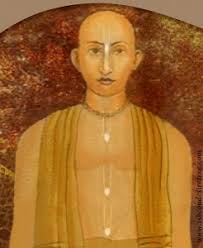
It was a great joy and a surprise even to myself to find a manuscript with the gloss of Srila Baladeva Vidyabhusana on the Vedanta-syamantaka, a text whose authorship has been disputed over the last two centuries. Even contemporary publishers remain divided: some credit Vidyabhusana as the author, while others credit his diksa-guru, Srila Radha-Damodara for the same. Manuscript evidence also gives the final answer to this old controversy. Up to the present, nobody has ever acknowledged the existence of this gloss in any of the lists of Vidyabhusana’s works. Given the importance of this discovery, at present I am exclusively dedicated to preparing a critical edition and translation in order to release this book as soon as possible.
In the last one year, I have gone on a few expeditions to various places in India and on a second expedition abroad, this time to Nepal. During the latter, I was cordially received in the libraries in Kathmandu and was delighted to come across over 100,000 manuscripts and microfilms, all well organized and attended by helpful staff. There seem to be many collections in the country side that also deserve to be explored.
In the course of my research work, I keep hearing shocking reports about people throwing, burning and burying whole collections of manuscripts, particularly in the Mathura district, where Vaisnava works are in major number and Gaudiya texts are still found in all directions. Just recently, I came to know that the owner of a large collection in Vrindavan declined to sell or give away his manuscripts, and instead buried all of them in his ashram. The situation may turn even uglier now that the Indian government has slashed funds for the classification and preservation of manuscripts.
The Baladeva Vidyabhusana Project’s main objectives are as follows:
1. Search for lost manuscripts (such as the complete commentaries on the ten Upanisads and the Six Sandarbhas of Jiva Gosvami).
2. Digitally preserve manuscripts currently existing in different libraries.
3. Digitally preserve all editions of Vidyabhusana’s books.
4. Digitally preserve articles written about Vidyabhusana.
5. Type the texts in digital unicode, which can be converted into Devanagari, Bengali characters, etc.
6. Prepare a critical edition of each work.
7. Translate all the works into English.
8. Publish all translations with the original Devanagari text.
9. Investigate and verify existent biographical data on Vidyabhusana.
10. Publish a comprehensive biographical work.
To see the colophon of the discovered manuscripts, as well as for more details, queries, and donations, the readers may visit the following page:
www.vidyabhusanaproject.blogspot.com
A reader answers Akincana Gocara’s call for comment on the removed paragraph with a short…
The co-author of “Forbidden Archeology” and a disciple of Srila Prabhupada since the 1970s spent…
A Sanskrit teacher’s eight-minute video on a 195-letter compound from a sixteenth-century poem has passed…
Representatives of ISKCON were among the religious bodies heard by the parliamentary panel examining the…
Four months after Prāṇadā devī dāsī published a book arguing that women have long served…
A Delhi news site has published the first detailed account of what the former auditor…