To Hospital or NOT to Build? That is the Controversy – part 1
Hospital Yajna? I was prowling the internet recently for some cyber-association and encountered a well written, straight forward presentation that raised questions about the role of ISKCON in the construction of Hospitals. I was so appreciative of how honest the article was I decided to leave a two sentence comment to that effect, not realizing…

Hospital Yajna?
I was prowling the internet recently for some cyber-association and encountered a well written, straight forward presentation that raised questions about the role of ISKCON in the construction of Hospitals. I was so appreciative of how honest the article was I decided to leave a two sentence comment to that effect, not realizing that by doing so it would be automatically posted back to my Facebook wall. Two days later I discovered that I had unintentionally stirred up quite a fury of commentary about this apparently very sensitive subject. A robust exchange ensued and with great interest I read and appreciated many comments representing all sides of this controversial issue. Should ISKCON be involved in building hospitals or NOT?
There isn’t any controversy regarding how Srila Prabhupada felt about this topic. He had a clear idea of what he wanted ISKCON to be and he admonished us to not let it slip into just another mundane philanthropic organization. He reminded us several times that those who do not acknowledge the Supreme Personality of Godhead can’t serve Him so they take up benevolent humanitarian causes as an alternative to that. Instead of serving Krishna, they serve man by giving aid to the poor and distressed. Srila Prabhupada specifically pointed out how building hospitals and schools was the most popular example of such mundane philanthropy.
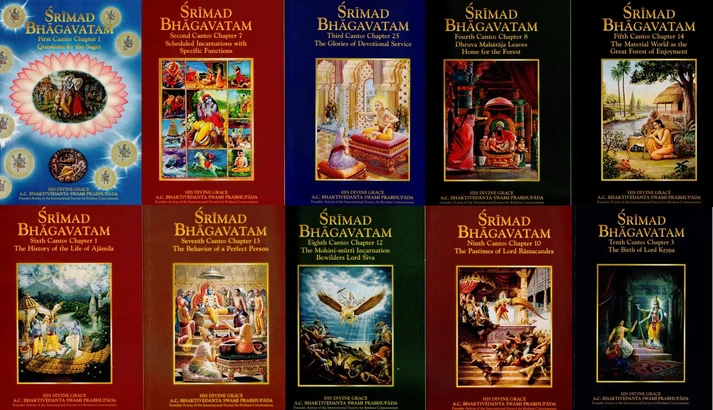
“Although the impersonalist rises to the Brahman effulgence and enters into that effulgence, he has no engagement in the service of the Lord, and therefore he is again attracted to materialistic philanthropic activities. Thus he comes down to open hospitals and educational institutions, feed poor men and perform similar materialistic activities, which the impersonalist thinks are more precious than serving the Supreme Personality of Godhead. Anadrta-yusmad-anghrayah. The impersonalists do not think that the service of the Lord is more valuable than serving the poor man or starting a school or hospital. Although they say brahma satyam jagan mithya–“Brahman is real, and the material world is false”–they are nonetheless very eager to serve the false material world and neglect the service of the lotus feet of the Supreme Personality of Godhead.” – Srimad Bhagavatam 8.4.13 purport
If Srila Prabhupada didn’t want his disciples to be distracted by the pursuit of materialistic philanthropic activities, why then does it appear that exactly what some of them have done? Perhaps part of the answer lies in the fact that his western disciples have been indoctrinated from birth with the Western Judeo/Christian/Islamic idea of what “spiritual” life means and we just can’t seem to shake off our Biblical heritage:
“And the King shall answer and say unto them, Verily I say unto you, Inasmuch as ye have done it unto one of the least of these my brethren, ye have done it unto me… Then shall he answer them, saying, Verily I say unto you, Inasmuch as ye did it not to one of the least of these, ye did it not to me.” Matthew 25:40 & 45
In this part of the Bible Matthew admonishes the followers of Christ to reach out to those who are less fortunate than we are and provide them with food, shelter, clothing, water and medications as they require. In fact, a good portion of the theology found in these mega faiths relies very heavily on all the miracles Jesus performed pertaining to the body. He gave sight to the blind, healed the lame, fed the hungry, cured a leper and even restored Lazarus from the dead! So perhaps because of all this heavy conditioning those of us influenced by these traditions still feel that if we aren’t healing the sick, we just aren’t very enlightened.
The irony is that as devotees we should know it’s actually just the opposite. The concept of offering a helping hand to someone in need is a very common characteristics of those in the mode of goodness. Devotees however aspire for the platform of suddha-sattva, which transcends all the modes of nature and addresses the soul directly without getting entangled in the minutia of bodily demands. One must be situated on the suddha-sattva platform to comprehend that the only effective healing we can offer someone is the medication of the Holy Name. Putting band-aid’s on one of the many millions of bodies the soul gets cycled thru is insignificant compared to the real prescription they so desperately need!
“After many millions upon millions of births, when one is complete in absolute knowledge, one still may not attain liberation, yet this man says that one may attain it simply by the awakening of a glimpse of the holy name.” – CC Antya 3 “The Glories of Srila Haridasa Thakura” -Text 194.
Yeah,.. this is a really tough concept for modern civilization to grasp because we have become so invested in trying to keep our current body, that is designed to age, decay, and chronically fail,… beautiful, healthy, and even fully sexual right up to our very last breath!
So is it terribly wrong for ISKCON to sponsor the construction of Hospitals?
Even neophyte devotees of Krishna know the answer to this some-what trick question. It’s not that it is a terrible thing for ISKCON to open a hospital… the real question is should we be giving the energy and resources Krishna bestows upon us towards doing that? After all, removing the cataracts from an old person so they can read the Bhagavad Gita perhaps for the first time is a wonderful blessing isn’t it? Of course it is,… but the dilemma is that building a hospital is just simply not found anywhere on ISKCON’s “Mission Statement.” Now why is that? Was it an over-site? Before we speculate too much about this let’s be careful to remember that ISKCON’s “Mission Statement” was personally authored by non other than the Founder Acharya of the Hare Krishna Movement himself, His Divine Grace A.C. Bhaktivedanta Swami Prabhupada.
ISKCON’s “Seven Purposes” Mission Statement
When Srila Prabhupada incorporated the International Society for Krishna Consciousness in 1966, he provided seven very clear and deliberate directives on what he wanted ISKCON to accomplish. These seven points are very similar to those given in the prospectus for The League of Devotees that he formed in Jhansi, India, in 1953. The League of Devotees never really took hold but Srila Prabhupada’s vision remained unchanged 13 years later when he incorporated ISKCON in New York. He had 13 years to change his original vision and revise his goals for ISKCON if he wanted to do so, but he didn’t. He just revived the same original objectives he laid out in Jhansi for his disciples in the West to follow.
Srila Prabhupada then had 12 more years as the founder acarya of the Hare Krishna movement to rethink and change the mission statement he for ISKCON if he felt it needed to be rectified, but he still didn’t make any modifications. The important point here is that Srila Prabhupada had about 25 years to fine tune His vision even after he could see how his network of temples were growing and his movement was beginning to have significant international status. Yet he never wavered from his original vision. Srila Prabhupada knew what he wanted and he had plenty of time to change things if he wanted to, but he never did.
For the purpose of this commentary I invite the reader to study the following seven articles of incorporation. Nowhere in these objectives does His Divine Grace even slightly hint at suggesting ISKCON should participate in any form of mundane philanthropy:
- To systematically propagate spiritual knowledge to society at large and to educate all people in the techniques of spiritual life in order to check the imbalance of values in life and to achieve real unity and peace in the world.
- To propagate a consciousness of Krishna (God), as it is revealed in the great scriptures of India, Bhagavad-gita and Srimad-Bhagavatam.
- To bring the members of the Society together with each other and nearer to Krishna, the prime entity, thus developing the idea within the members, and humanity at large, that each soul is part and parcel of the quality of Godhead (Krishna).
- To teach and encourage the sankirtana movement, congregational chanting of the holy name of God, as revealed in the teachings of Lord Sri Caitanya Mahaprabhu.
- To erect for the members and for society at large a holy place of transcendental pastimes dedicated to the personality of Krishna.
- To bring the members closer together for the purpose of teaching a simpler, more natural way of life. 7. With a view towards achieving the aforementioned purposes, to publish and distribute periodicals, magazines, books and other writings.
Discover more from Akincana Gocara
Subscribe to get the latest posts sent to your email.



Author is incorrect and Part two appears to be omitted.?