This chapter particularly describes the brahmacārī and the person in the vānaprastha stage, and it also gives a general description of the four āśramas — brahmacarya, gṛhastha, vānaprastha and sannyāsa. In the previous chapter, the great saint Nārada Muni has described the varṇa institution of society, and now, in this chapter, he will describe the stages of spiritual advancement in the four āśramas, whichContinue Reading

Share:

This chapter describes the general principles by following which a human being, and specifically one who is interested in advancing in the spiritual life, can become perfect. By hearing about the characteristics of Prahlāda Mahārāja, Mahārāja Yudhiṣṭhira became extremely pleased. Now he inquired from Nārada Muni about the actual religionContinue Reading

Share:

Prahlāda Mahārāja said: One who is sufficiently intelligent should use the human form of body from the very beginning of life — in other words, from the tender age of childhood — to practice the activities of devotional service, giving up all other engagements. The human body is most rarelyContinue Reading

Share:

We should always remember the distinction between spiritual and material. That which is material is infected by material qualities, but these qualities cannot touch that which is spiritual, or transcendental. Kṛṣṇa is absolute, whether He is in the material world or the spiritual world. When we see partiality in Kṛṣṇa,Continue Reading

Share:

The laws of nature work in subtle ways unknown to us. Mahārāja Bharata was a great king very advanced in devotional service. He had almost reached the point of loving service to the Supreme Lord, but even from that platform, he could fall down onto the material platform. In Bhagavad-gītā we areContinue Reading

Share:

When the mind is polluted by fruitive activity, the living entity wants to be elevated from one material position to another. Generally, everyone is involved in working hard day and night to improve his economic condition. Even when one understands the Vedic rituals, he becomes interested in promotion to heavenlyContinue Reading

Share:

Prabhupada: Surrender is willing. If you don’t like to surrender who can make you obliged to surrender? Surrender is voluntary. “Yes, I surrender.” Determination, “Yes I surrender.” Who can make you obliged to surrender? Nobody can make. Even Krsna can not work. This is a false pretense, “Please be mercifulContinue Reading

Share:

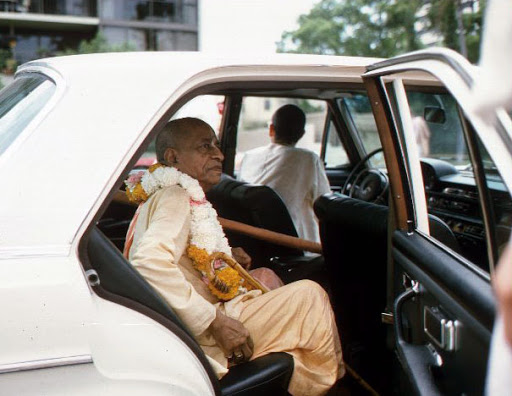
December 18, 1972 : Bombay Every morning Srila Prabhupada, Shyamasundara Dasa and I would take Kartikeya’s car, an Ambassador, and drive to a waterfront area for walking. After one morning walk, we returned to the car and Shyamasundara could not get the key to work in the ignition. “Srila Prabhupada,Continue Reading

Share:

Bhaktisiddhanta Sarasvati Thakura was the spiritual master of His Divine Grace A.C. Bhaktivedanta Swami Prabhupada, the Founder-Acharya of ISKCON. Srila Bhaktisiddhanta Saraswati Thakura powerfully spread the teachings of Chaitanya Mahaprabhu in the early twentieth century. He preached strongly against the deep-rooted influences of caste-ism and impersonalism. Meeting with scholars, educators,Continue Reading

Share:

nityaṁ dadāti kāmasya cchidraṁ tam anu ye ’rayaḥ yoginaḥ kṛta-maitrasya patyur jāyeva puṁścalī An unchaste woman is very easily carried away by paramours, and it sometimes happens that her husband is violently killed by her paramours. If the yogī gives his mind a chance and does not restrain it, his mindContinue Reading

Share: